July 2023 started on a refreshing note.
The C.A.R.E School of Architecture, in Trichy, Tamil Nadu, invited me to take a short summer course based on my practice of making natural inks and pigments. So, I set off, with my bags and notes full of enthusiasm to share my world of natural colours with a new bunch of young people.
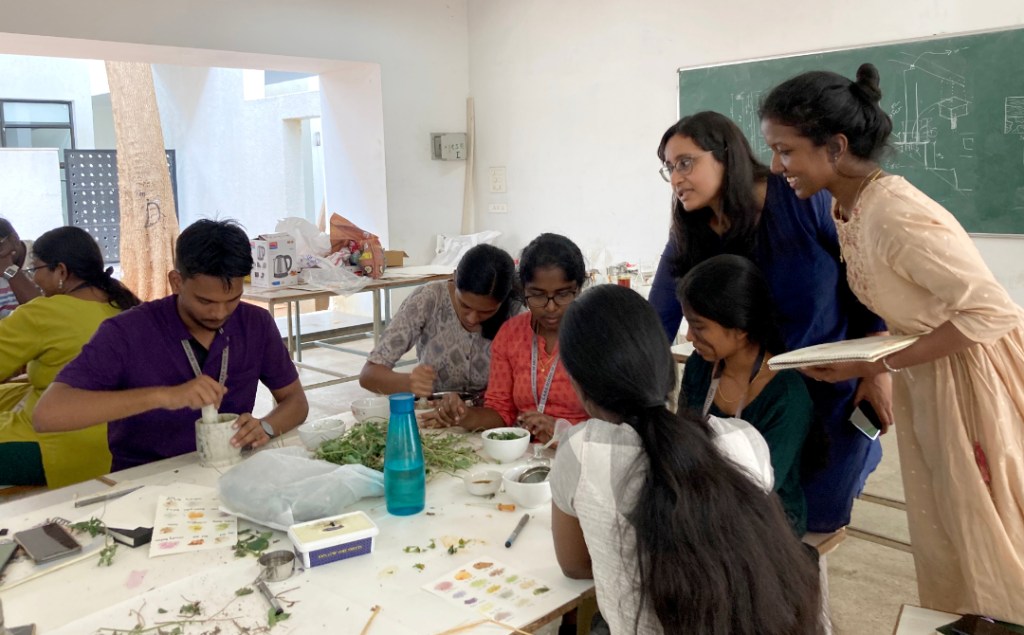
It was a five-day colour making journey, that was also an experience in learning and appreciating new things. For the participants, it was about the endless possibilities of making colours from natural sources. The proof of this was in the variety of colours they extracted from plants around them, and then made artworks with it all. For me, it was another opportunity to witness the innate human want (and possibly the need) to create and make, amidst keeping routines and chasing deadlines. The participants made visible their curiosity about this new topic and their enthusiasm towards explorations, every single day, up till the final day of display.
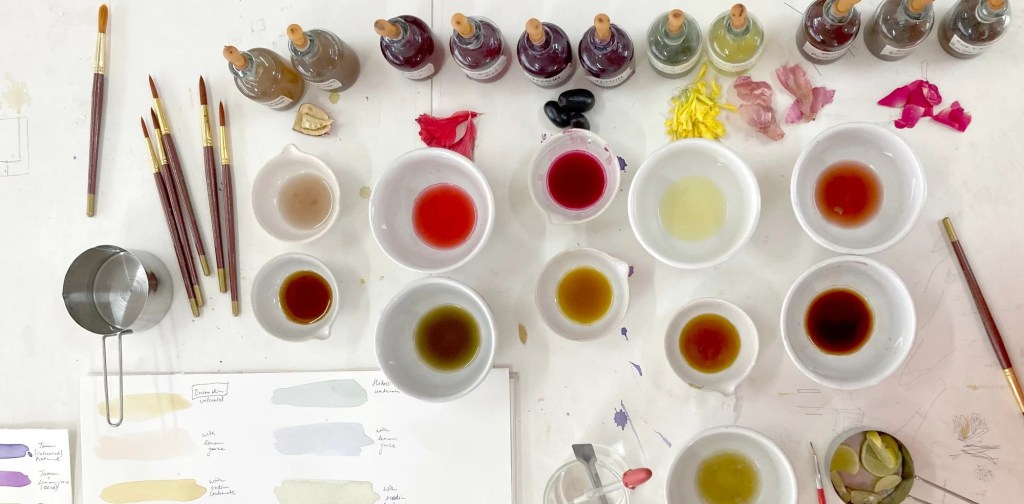
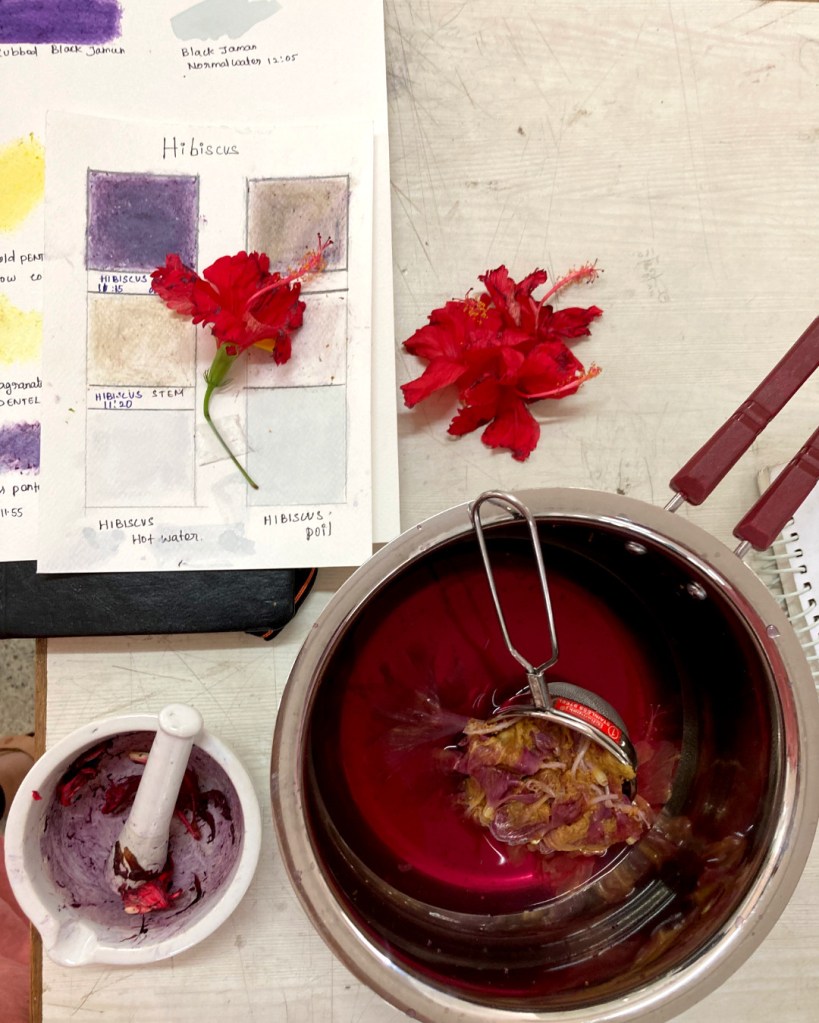
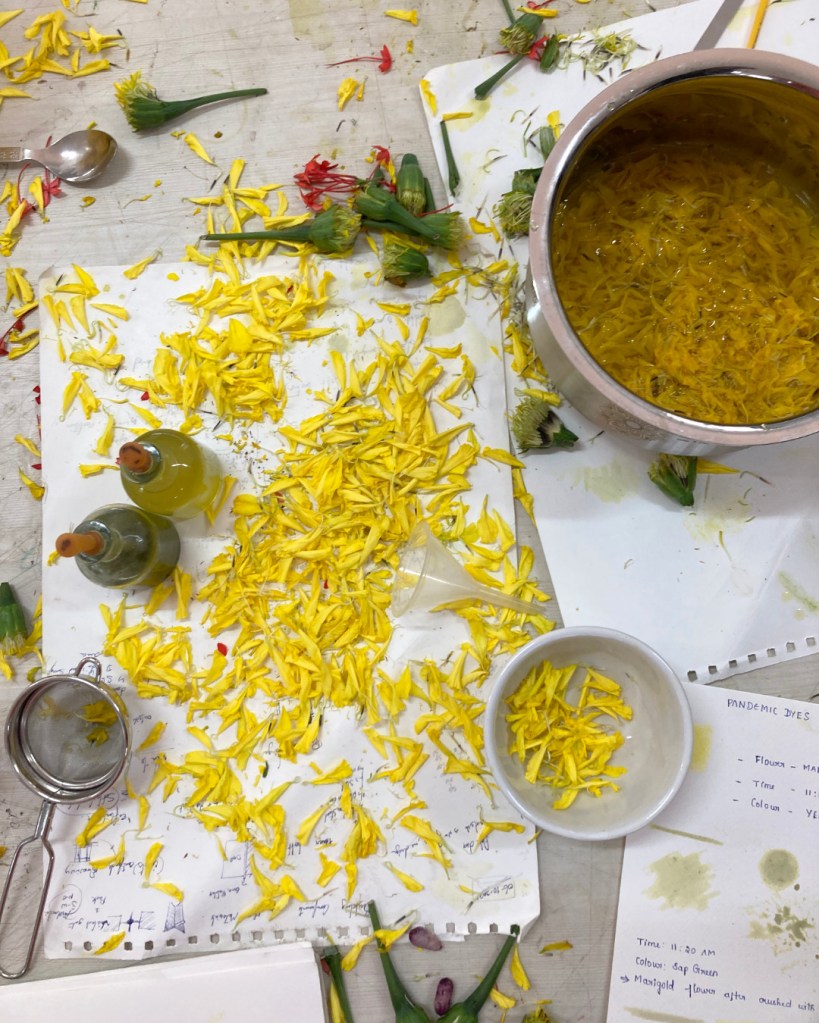
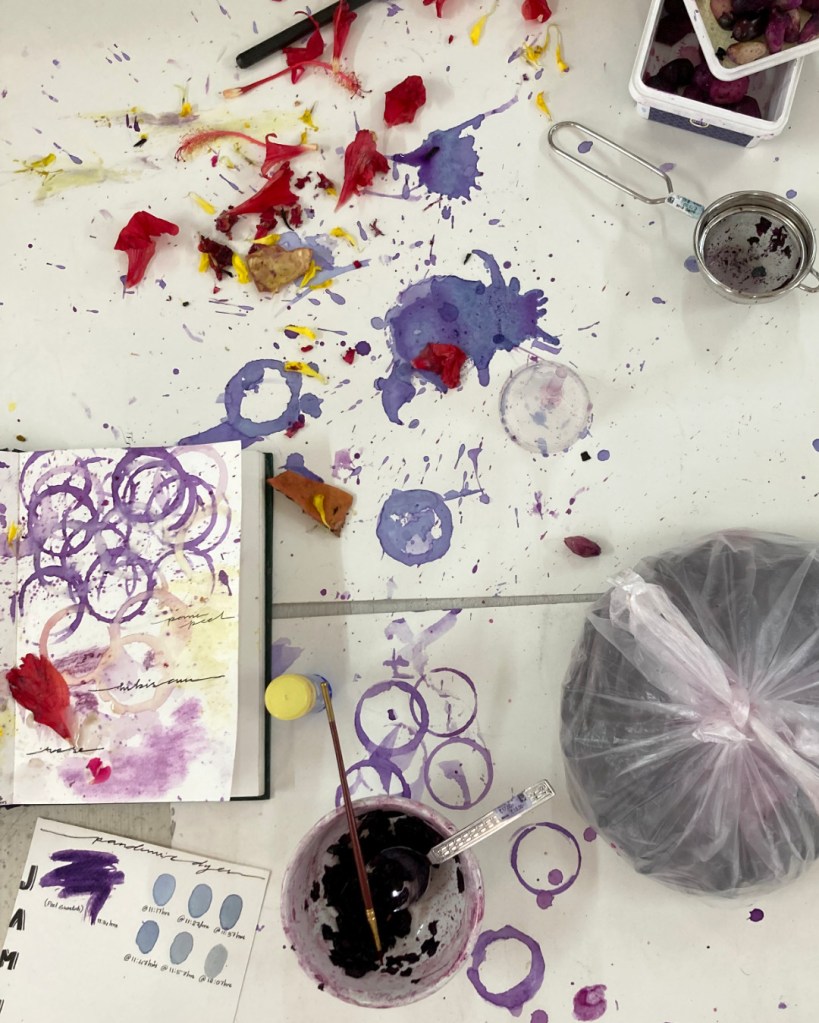
We began the workshop with making inks from select natural sources, like onion skins, hibiscus flowers, marigolds, pomegranate skins and jamun skins. These were collected, in coordination with the School’s admin, either from the campus kitchen or purchased from the closest local market.
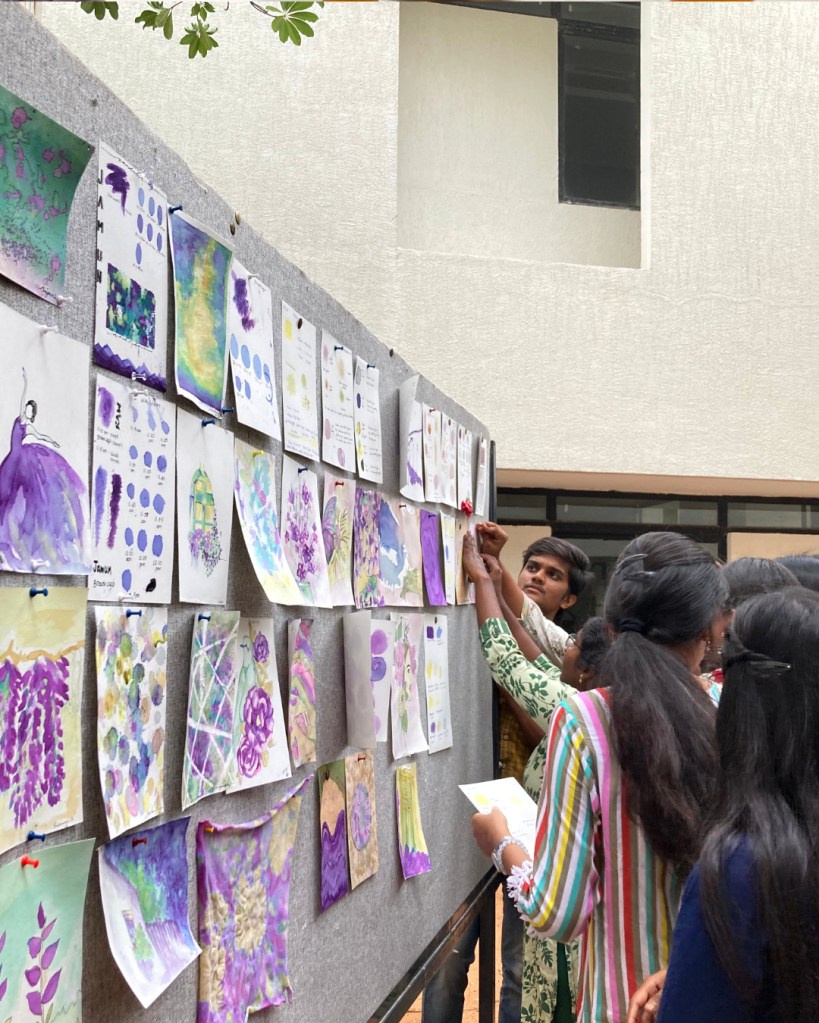
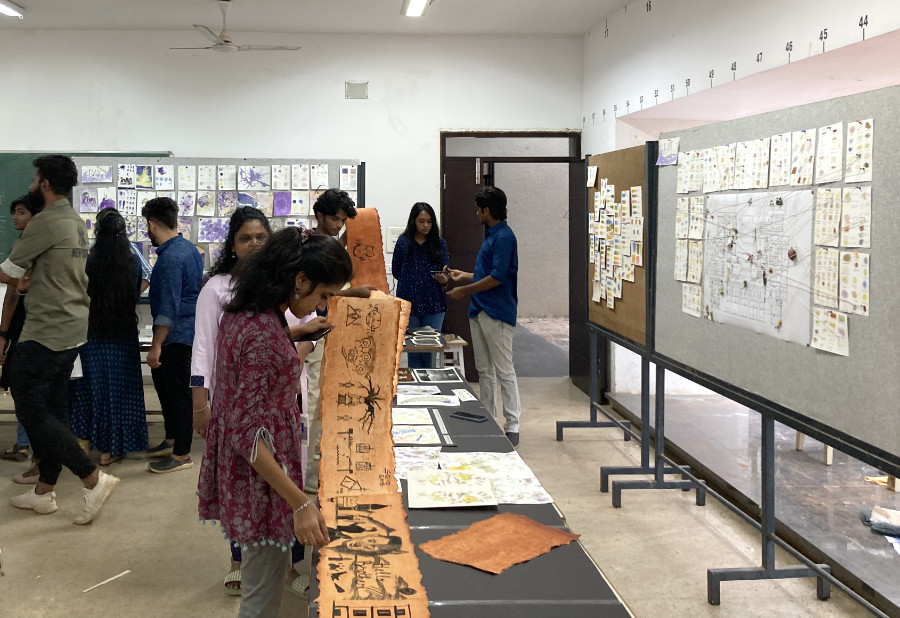
A range of methods were employed to extract colour. We soaked some natural sources in tepid or hot water while other sources were ground into a pulp and squeezed to release the colour-carrying compounds. Using these as inks, the participants made a variety of artworks and pinned up all of them at the end of the day. This was their first assignment, and it made for a vibrant display for all to see.
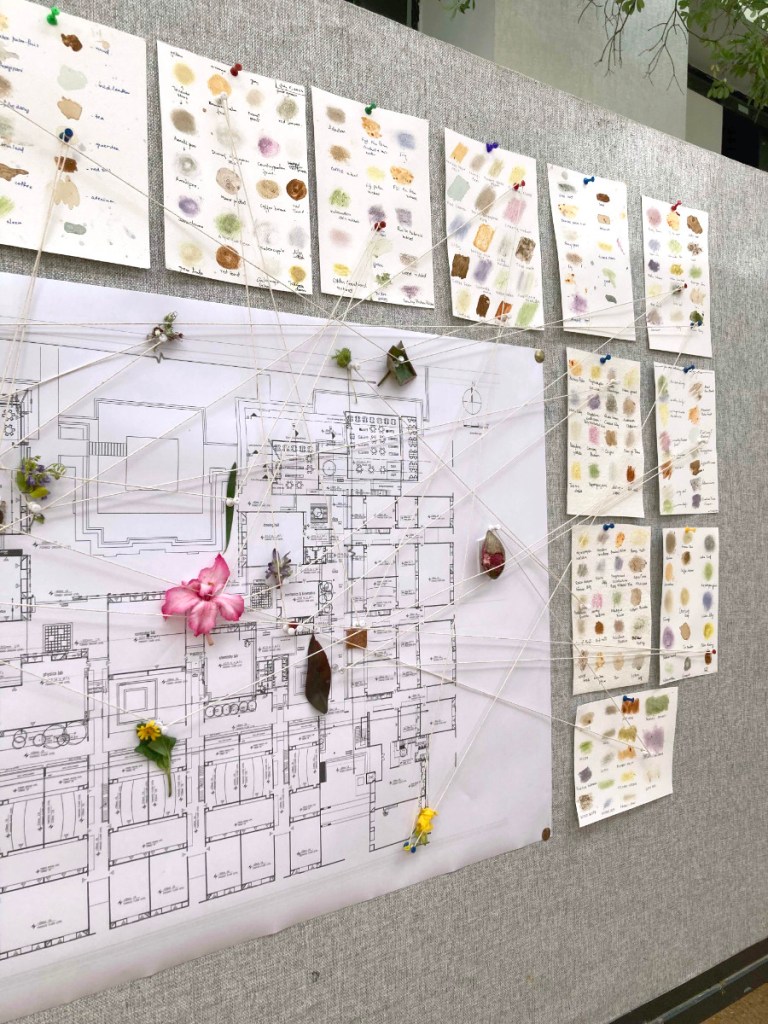
For the next day’s project, I asked the students to take a walk around the institution campus and pick up all possible natural sources they felt which could produce any colour–in the form of ink or dry pigment. Upon returning with the leaves, flowers, and soils they picked, the assignment was for each participant to make swatch cards of all the colours they collectively extracted, along with names of the source material picked.
Being an architectural college and as all participants were aspiring architects, it seemed like an obvious exercise in plotting the many plant sources they had foraged on to a site map of the campus, along with their swatch cards. The result was this beaming board of plant inks, handwritten colour names, and an exercise in making visual links with our surroundings (both natural and human-made).
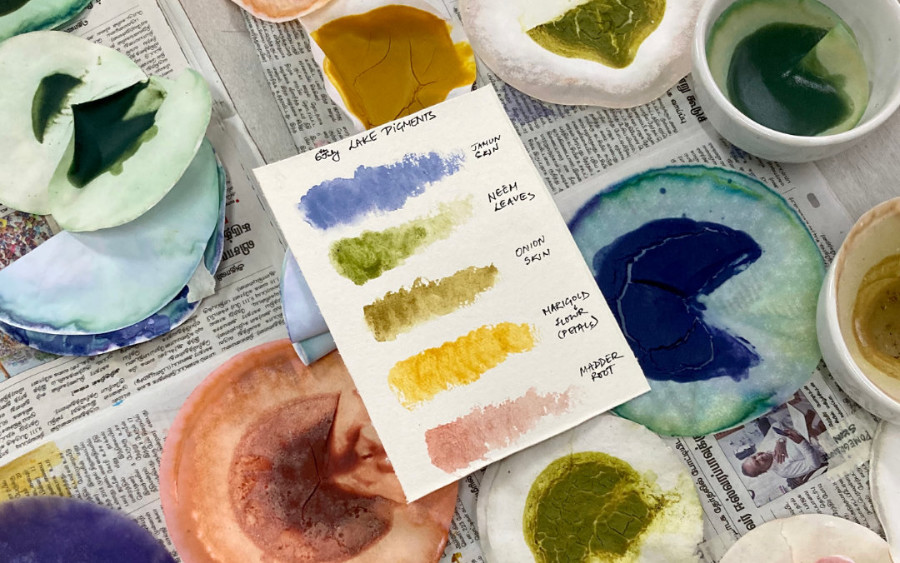
The next exercise was in understanding and making lake pigments. A lake pigment is the result of a relatively simple chemical reaction, where the colour-carrying part of the natural dye is extracted by precipitating it using an inert binder or a mordant.
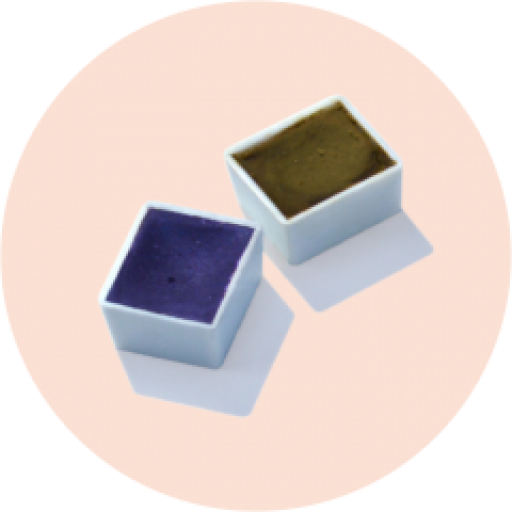
We put to use all the natural sources from the first day–the flowers and fruit peels–to extract the pigments. The mordent used was potassium alum and the precipitant was washing soda. Making lake pigments involves both a quick, instantaneous reaction followed by a long duration of waiting for the precipitated pigment to dry. This waiting period was punctuated by a one-day field visit to the nearby site of Athangudi tiles making industry in Karaikudi. After returning from the site visit, as the pigments dried, we mulled them into watercolors and made swatch cards again.
These various ways of extracting colour and using them to paint led us all towards a final project. I set an open-ended brief of this last assignment. It required the participants to make their own colours (inks or pigments) and decide for themselves how they would apply those to create visual works. The two constraints were to use natural sources of colour, and to ensure that the final output was their your own original thought or concept (not one borrowed from Instagram or Pinterest). All this culminated in an open house display of the entire week’s work.
At the outset, the core activity of this workshop was of extracting colours from natural sources. Yet, it simply served as a means to some specific learnings that I have built into the assignments–particularly for the TikTok and Reels generation. These learnings begin with making observations, then to document those observations in as much detail as possible, and re-introduced the need to find and create links between oneself and the environment around. Doing all these through the act of extracting colours from nature makes the entire process that much more engaging, don’t you think?
As this five-day adventure came to a close, I made some observations of my own, in teaching design fundamentals to undergraduate students,
- It helps to work without the pressure of output. It surprisingly increases one’s productivity! This was observed and remarked upon by the teachers as well as the institute’s director, when they saw the daily display of natural colour works by the participating students.
- A balance of fun and purposeful direction is key to an engaging and successful project of any kind–be it a workshop, a classroom project or a commercial design project. This was evident in the excitement shown by the participants in discovering new colours, while also working towards exhibiting their creations.
- Time is one of the main collective resources on hand. It is also an undeniable guiding force. It demands to be used as intelligently as possible during a group endeavor.
- Lastly, I cannot overstate the joy and privilege of working with supportive and encouraging team members. I found myself amidst such company of teachers and administrators at CARE School of Architecture.


This workshop was made possible by the team effort of Ar Maniyarasan R, who initiated the conversation about this course, Ar Monisha Nageswaran who assisted me in engaging with the participants through the five days, and the academic & administrative departments at CARE School of Architecture who took care all things admin.
All images are by the author.

 Pans & Spaces
Leave a comment